Last updated: October 22, 2026
If you break a lease, your security deposit can be applied to rent you still owe, a lease break fee, unpaid utilities the lease puts on you, and sometimes reletting costs after you move out. What Happens to a Security Deposit If You Break a Lease? depends on the lease language, your state’s rules, and how quickly the landlord can re-rent the place. That does not mean the whole deposit automatically disappears, but it also does not mean you get it back in full.
The short answer on a lease break security deposit
Your security deposit is usually the first pot of money a landlord looks at after an early move-out, but it is not a free penalty fund. The lease break security deposit issue is really three separate questions at once: what you still owe, what the lease allows, and what the landlord can prove with records.
A lease break often creates a stack of charges:
- Unpaid rent for the period before the unit is re-rented
- Lease break fee if the lease has a clear early termination clause
- Reletting costs if the lease says you pay them and they are actually incurred
- Repairs for damage beyond ordinary wear, if that applies under the lease and state law
The deposit can cover some or all of that balance. If the balance is smaller than the deposit, the rest should be returned after the landlord finishes the final accounting. If the balance is larger, the landlord can bill you for the remainder.
This is where many readers get tripped up: moving out early does not erase the rent obligation by itself. It changes the landlord’s job too. In many places, the landlord must try to reduce losses by re-renting the unit as soon as practical. That mitigation duty matters because it can limit how much of your deposit can be kept for rent after you leave.
A generic article often leaves out the timing. Timing matters. A landlord may hold the deposit while waiting for the unit to re-rent, then apply it to the unpaid balance after the move-out accounting is done. If the unit is re-rented quickly, the rent portion of the claim may shrink. If it sits empty for 2 months, the unpaid-rent portion may be much larger.
The practical takeaway is simple: breaking the lease does not make the deposit vanish into a black hole, but it can be used against real losses tied to the lease break. The more precise the lease language, the easier it is to predict the outcome.
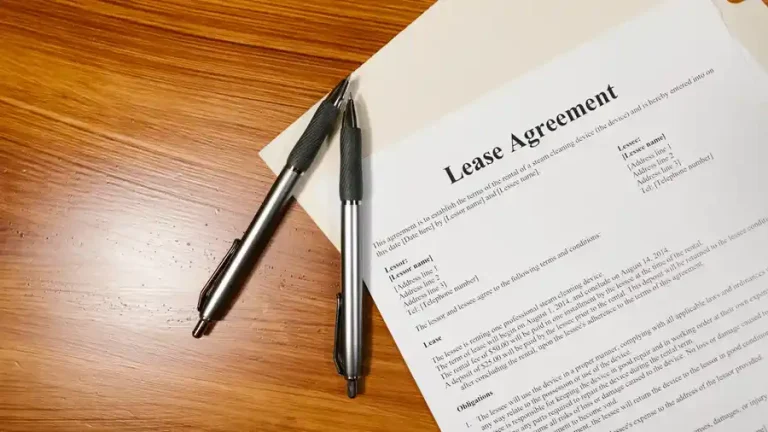
Read your lease for the one paragraph that controls the fight

Your lease will usually tell you whether the landlord can charge a fixed lease break fee, recover reletting costs, or demand rent until a new tenant starts paying. That paragraph matters more than the move-out date you had in mind.
Look for these words or close variants:
- Early termination
- Lease break
- Reletting fee
- Liquidated damages
- Mitigation
- Acceleration of rent
- Notice period, often 30 or 60 days
A fixed lease break fee is different from unpaid rent. A fee is a pre-set charge for ending early, often stated as a dollar amount or as 1 or 2 months of rent. Unpaid rent is the actual rent that remains due after you leave, usually until the unit is re-rented or the lease term ends, depending on the lease and local law. Reletting costs are separate again; they are the landlord’s reasonable costs to find a replacement tenant, not a blank check.
Here is the problem with skipping the lease: a reader may assume the deposit can only cover damage. In many leases, the deposit can also be applied to money owed under the contract. That can include rent, a stated termination charge, or certain collection costs if the lease allows them and the law does not forbid them.
The lease can also limit the landlord. Some agreements say the fee is the exclusive remedy for early termination. Others say the landlord can charge the fee and still recover rent until the unit is filled. Those are not the same thing, and the difference can change the whole deposit outcome.
If the lease is unclear, the safer move is to treat it like a math problem and check the numbers against the clause, not a moral debate. Pull out the exact clause, the monthly rent, the move-out date, and any written notice you gave. Those four items usually determine whether the deposit is fully used, partly used, or mostly returned.
For a broader explanation of how deposits work in ordinary move-outs, the security deposit hub should handle the general rules; this page stays on the lease-break version of the problem. For state-by-state rules, see the tenant rights guide and the state eviction laws index.
What happens to the deposit after you move out early
The deposit is usually applied after move-out, then any leftover amount is returned with an itemized statement if your state requires one. That final accounting is where the landlord matches the deposit against the actual loss.
A common sequence looks like this:
- You give notice or leave early. The lease may require 30 days, 60 days, or another written notice period. If you skip notice, the landlord may claim extra rent.
- The landlord inspects the unit and tracks the dates. This sets the start of the unpaid-rent period and shows whether the unit is ready to re-rent.
- The landlord lists the unit and markets it. Ads, showings, and a new lease file can all matter because they show mitigation efforts.
- The deposit is applied to the balance. Rent, a lease break fee, and reletting costs may come first, then qualifying damage charges if any remain.
- You receive the remaining deposit or a balance bill. If the charges exceed the deposit, you may owe more after the accounting is done.
The key detail is that the deposit is not usually “held hostage” just because you broke the lease. It is tied to the landlord’s claim. If the landlord re-rents in 12 days, the unpaid-rent figure should look different than if the unit sits empty for the rest of the lease term. That is why move-out paperwork matters.
Keep copies of three things: your notice, photos of the unit on the day you left, and any email showing when the unit was advertised again. Those records are what turn a vague dispute into a numbers dispute.
One common mistake is paying a lease break fee and assuming the deposit must come back untouched. That only works if the lease says the fee replaces further rent claims. Another mistake is letting the landlord lump every charge under “deposit forfeiture.” Ask for a line-by-line statement showing what portion was rent, what portion was a fee, and what portion was reletting cost.
Can the deposit cover unpaid rent?
Yes, the deposit can often be used for unpaid rent if the lease and local law allow it. Rent is usually the first thing a landlord applies deposit money toward after a lease break because rent is the clearest measurable loss.
That said, unpaid rent is not automatic forever. The landlord usually cannot sit on the unit, do nothing for 3 months, and then charge you as if no effort was made to re-rent it. Mitigation matters. If the place was reasonably re-rentable and the landlord delayed, your rent balance may be smaller than the full remaining lease term.
This is where readers need a clean mental model:
- If the unit is empty for 1 month, the deposit may cover that month’s rent first.
- If the lease has a stated termination fee, that fee may be added on top.
- If a new tenant moves in after 2 weeks, the rent charge may stop much sooner than expected.
- If the deposit is larger than the balance, the leftover should be returned.
The landlord’s records matter as much as your own. A dated ad, lease application, or signed new lease can show when the landlord stopped losing rent. Without those documents, the dispute often turns into a credibility fight.
One trade-off is that deposit money is easy for a landlord to apply and hard for a tenant to claw back later. The upside is speed: it often resolves part of the debt without a separate collection action. The downside is that a deposit can disappear before the full story is sorted out, which is why you should ask for a written itemization quickly.
This section is not for a tenant who has already signed a settlement agreement saying the deposit is nonrefundable. That is a different contract problem, and the result can change fast if you signed away later claims. If the amount is large or the lease language is dense, a local tenant lawyer or legal aid office is worth the call. For federal guidance on deposits and tenant-landlord disputes, see the Consumer Financial Protection Bureau and HUD’s tenant rights resources.
What charges can still be added after I leave?
Charges can still be added after you leave if the deposit does not cover the full balance and the lease allows those charges. The final bill can include more than one line item, but it should not be a vague total with no explanation.
Typical post-move-out charges include:
- Unpaid rent until the unit is re-rented or the lease ends, depending on the lease and local rules
- Lease break fee if the early termination clause says so
- Reletting costs if the lease assigns those costs to you
- Late fees on overdue rent, if the lease and law allow them
- Collection costs only if the lease and law permit them
- Damage charges for issues beyond ordinary wear
The important distinction is between a contractual charge and a penalty. A genuine lease break fee may be enforceable if it is written clearly and fits the lease terms. A random extra fee named after the fact is more vulnerable to challenge. The same is true for reletting costs: they need to be tied to actual work or actual expense, not just a round number someone invented.
A common mistake is assuming the deposit is the ceiling on what the landlord can collect. It is not. If the deposit is $1,000 and the balance after re-renting is $2,400, the landlord may still pursue the remaining $1,400 if the claim is valid. The reverse is also true: if the charges total $700, the landlord should not keep the whole $1,000 without returning the difference.
Another mistake is forgetting to ask for the move-out ledger. A ledger shows what was charged, what was credited, and what was still owed after each step. That document can help spot an error in rent dates or duplicated fees.
How to protect yourself before and after you leave
You protect yourself by documenting the move, asking for the balance in writing, and pushing back on any charge that is not tied to the lease or the actual loss. That is the cleanest way to reduce what gets taken from the deposit.
- Give written notice immediately. Send it by the method the lease requires, often email plus certified mail. A 30-day or 60-day notice period can change the rent math.
- Photograph the unit on move-out day. Take clear photos of each room, the stove, sinks, floors, and any pre-existing damage.
- Return keys and get a receipt. A key return record helps prove the exact end of possession.
- Ask for a move-out statement. Request a written breakdown of the deposit, any rent balance, and any lease break fee.
- Compare the charges to the lease. If a reletting fee appears, find the clause that authorizes it.
- Challenge double counting. A landlord should not charge a lease break fee and then also claim the same lost rent period twice under a different label.
- Keep every message. If the unit is re-rented after 10 days, that date can matter a lot.
If you are still in the unit, the better move is to treat the lease break like a settlement exercise and, if the amount is large, consult a local tenant lawyer or legal aid office before you agree to a number. Get the numbers, compare them to the lease, and push for a corrected statement before the account goes to collections.
For a wider primer on deposits in ordinary tenancy endings, the main security deposit guide can fill in the basics this page skips. You can also compare your rights with the renters’ guide to notices and the move-out checklist.
When the landlord’s claim is too high
The landlord’s claim is too high when the charges exceed the lease, the actual loss, or both. That can happen even when the tenant did break the lease.
Watch for these red flags:
- The landlord keeps the deposit and still bills full rent for months after a new tenant moved in.
- The ledger lists a lease break fee and also charges rent for the same period the fee was meant to replace.
- Reletting costs appear with no explanation or supporting invoice.
- The final statement mixes damage, rent, and fees into one number.
- The landlord ignores a notice period you already satisfied.
In those situations, the dispute is usually about proof, not emotion. A calm written request for the itemized statement, the lease clause, and the re-rental date is often the first step. If the landlord refuses to explain the charges, that is when a tenant should consider local legal help, because the answer can turn on state landlord-tenant rules.
The honest limit here is that lease-break disputes are very state-specific. Some places allow broader fee recovery, while others narrow what can be taken from the deposit or how long rent can be charged after move-out. That is why a general article can tell you the framework, but not the final dollar amount for your address.
If the lease was ended by mutual agreement, the result can also change. A written surrender agreement may replace the normal rent-and-deposit rules with a negotiated figure. That agreement controls more than a generic lease clause.
Key takeaways
- Breaking a lease does not automatically erase your deposit, but it does not automatically forfeit it either.
- The deposit is usually applied to unpaid rent first, then to a lease break fee, reletting costs, and other allowed charges.
- The landlord’s duty to re-rent can shrink what you owe, especially if the unit fills quickly.
- A written itemization is the most important document after move-out.
- If the charges are larger than the deposit, you can still owe a balance.
Can the landlord keep my deposit if I break the lease?
Yes, the landlord can often keep some or all of the deposit if the lease break leaves unpaid rent, allowed fees, or documented damages.
Drafted with AI; not yet reviewed by a person.