Last updated: October 22, 2026
Quick Answer: In many cases, the fastest path to getting your security deposit back is a complete written request backed by dated photos, a forwarding address, and a clear move-out record. A strong security deposit return request is a paper trail, not a plea.
Key takeaways
- Start before you hand over the keys, because missing photos or a forgotten forwarding address can slow the whole request.
- Build one file with move-out photos, a signed move-out inspection note if you get one, and copies of cleaning receipts or repair records.
- Ask for the deposit in a short written request that includes the move-out date, the address to mail the check, and a clear ask for any itemized statement if money is withheld.
- If the landlord sends deductions, compare them against your own records before you respond.
- This process is for tenants who want to document condition and ask for the return; it is not the place to argue state-by-state deadlines or the legality of every deduction.
What to gather before you ask for the deposit back

You need proof of the apartment’s condition, proof of where to send the money, and proof that you asked. Without those three pieces, a security deposit return request becomes easy to ignore.
Start with a move-out checklist for the exact unit you left. Include every room, every appliance, every fixture, and any item that was already damaged when you moved in. A 10-minute checklist on the day before move-out is better than relying on memory after the keys are gone.
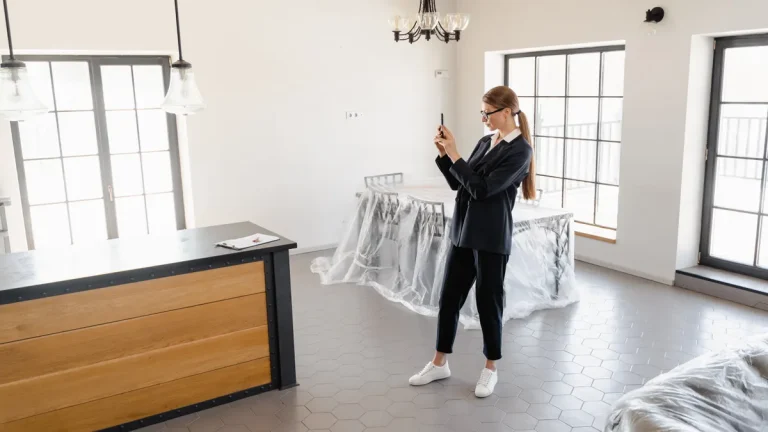
Save move-out photos and video in one folder. Take wide shots of each room, then close shots of anything disputed: stained carpet, chipped tile, nail holes, broken blinds, scuffed baseboards, or a missing smoke detector battery cover. Photos should show the date if your camera app includes it; if not, keep the original file untouched so the timestamp remains intact.
Keep copies of the move-out inspection paperwork, if your landlord or property manager uses one. A signed inspection note or walk-through form is useful because it shows what both sides saw at handoff. If the manager refuses to sign, write down the name, date, time, and what was said.
Save receipts for cleaning, patching, key replacement, or professional services you paid for before leaving. Cleaning or minor repair costs can help explain the condition you left behind. If you did the work yourself, take before-and-after photos instead of trying to prove it with a memory.
The best file is usually boring and complete. The worst file is often a text thread, one blurry photo, and a hope that the landlord “remembers.”
How do I ask for my deposit back?
You ask for it in writing, with the forwarding address, the move-out date, and a clear request to return the security deposit. A brief message sent by email and kept as a PDF is usually enough to start the process.
Use a simple subject line such as “Security deposit return request for [address].” In the body, include:
- Your name as it appears on the lease.
- The rental address and unit number.
- The date you moved out and returned the keys.
- The forwarding address where the check should be mailed.
- A direct sentence asking for the return of the security deposit and any itemized statement if anything is withheld.
If there was a final walk-through, mention it. If you have photos or a move-out checklist, say you can provide them if needed. Keep the tone firm and neutral. A long explanation usually weakens the message because it gives the other side more to argue with.
Send the request to the address the lease names for notices, plus the property manager’s email if you have it. If you only text, you may end up with a conversation that is hard to print later. Email gives you a time stamp and a copy you can forward.
What success looks like here is simple: the message lands, the landlord acknowledges it, and you have a saved copy showing exactly what you asked for. If the office replies with “received” and confirms the mailing address, that is a good sign. If they do not reply, your record still shows that you asked.
One practical note: if you moved, make sure the forwarding address is complete, including apartment number, ZIP code, and any c/o name the mailroom needs. A missing digit can turn a check into a delay.
What evidence helps most if the landlord disputes the condition?
The strongest evidence is time-stamped proof that the unit was left in the condition you say it was left in. That means photos, video, inspection notes, and records that connect the unit’s condition to the day you moved out.
A strong evidence set usually includes:
- Wide photos of each room taken on the same day.
- Close-ups of any disputed damage.
- A walk-through or move-out inspection form, even if it is informal.
- Copies of the move-in condition report, if you still have it.
- Cleaning and repair receipts dated before the keys were returned.
- A written note of any conversation about the condition, including date and time.
Use the same angle for before-and-after photos when you can. That makes the comparison easier. If the carpet had an existing stain when you moved in and you took a photo of that at move-in, pair it with a move-out photo from the same corner or doorway. Two matching angles often tell the story faster than a long explanation.
If the landlord claims something was broken, look for the paper trail around that item. A loose cabinet door, for example, is more persuasive when you can show the move-in checklist marked “cabinet hinge loose” or “bathroom drawer sticks.” Without that, the conversation turns into a memory contest.
Avoid editing photos or adding filters. A clean original file is better than a polished one that raises questions. If your phone lets you export metadata, keep that too.
This is where many tenants lose momentum: they have evidence, but not organized evidence. Put everything in one folder named with the address and move-out date. If you ever need to send a dispute letter later, that folder becomes your source file.
For a broader overview of the whole process, the hub on security deposit return can sit beside this page.
What if the landlord sends an itemized statement?
You should compare the itemized statement line by line against your own records before you respond. The point is not to argue every charge immediately; it is to spot mismatches, duplicate charges, and items you can document.
An itemized statement should be treated like a checklist against your evidence, but if the charges are unclear or the rules are not obvious, consult a qualified local professional or tenant-rights resource before you respond. Look for:
- Charges for things you already documented as pre-existing.
- Duplicate cleaning or repair entries.
- Descriptions that are vague, such as “general restoration” or “miscellaneous labor.”
- Items that do not match the room or fixture in question.
- Numbers that do not align with the photos or receipts you saved.
When you find a mismatch, mark the exact line and attach the matching proof. A side-by-side reply works well: statement item on the left, your evidence on the right. Keep the reply short. You are building a record, not writing a speech.
If the statement includes a professional service, save the name of the vendor and the date. That information can help you understand what the landlord says was done, even if you never saw the invoice itself. If the numbers are broad and unexplained, ask for clarification in writing.
Do not send a pile of photos with no labels. That wastes time and makes your point harder to follow. Instead, name files clearly: “living-room-wall-left-side.jpg” or “entry-door-condition.jpg.” A landlord or property manager can only review what they can quickly identify.
This is also where tone matters. A statement that says, “Please explain this $180 charge for wall repairs, as my move-out photos show no damage beyond nail holes I patched before move-out,” is more useful than a hostile message. The first version gives the other side a path to respond.
Common mistakes that slow down the return
The most common mistake is leaving without a forwarding address in writing. That costs time because the landlord may not know where to send the check, and you may not have proof that you supplied the address. Fix it by sending the address in the same email as your deposit request and saving a copy.
A second mistake is relying on memory instead of photos. After 30 days, a person remembers the good parts and blurs the details. That costs you when you need to show what the place looked like at move-out. Fix it with room-by-room photos and a dated checklist.
A third mistake is using only one channel, like text. Text can be useful, but a message thread can get buried or lost when a phone changes. Fix it by sending the request by email and keeping a PDF copy. If you text as a follow-up, make it a short pointer to the email.
A fourth mistake is cleaning, patching, or repairing something and then failing to photograph the result. That costs you the chance to show that you handled the issue before leaving. Fix it by taking “after” photos in the same light and from the same spot.
A fifth mistake is answering a deduction with emotion instead of evidence. “This is unfair” does not help much. “The itemized statement lists a damaged blind in the bedroom; the attached photo from move-out shows the blind intact” helps more.
One honest limitation: if you never documented the apartment when you moved in, the case is harder. You can still win on the strength of move-out evidence, but you have less to compare against. That is why this process works best for a tenant who starts collecting proof before the keys are turned in.
How to send a dispute letter if the return is short
You send a short dispute letter when the itemized statement does not match your evidence or when the deposit return is missing entirely. The letter should point to specific facts, not argue the whole rental history.
Keep it to one page if possible. Include your name, the rental address, the move-out date, the forwarding address, and the exact items you dispute. Then list the evidence attached: move-out photos, the inspection note, receipts, or the move-in condition report.
A practical structure is:
- Opening sentence: state that you are disputing the deposit withholding.
- Middle paragraph: list each charge you challenge and why.
- Closing sentence: ask for the disputed amount to be returned or for a corrected itemized statement.
If the letter is mailed, use a method with proof of delivery so you can show it was sent. Keep a copy of everything. If you send the letter by email too, include the same attachments so the recipient does not have to hunt for them.
Do not turn the letter into a long story about the lease, the neighbors, or a bad relationship with the manager. Only the facts tied to the deposit belong here. A focused letter is easier to read and easier to answer.
This step is not for every case. If the landlord has already corrected the issue after a simple email, a formal dispute letter is unnecessary. Use it when the first request is ignored, the statement is wrong, or the return is smaller than the evidence supports.
For legal questions about what can or cannot be deducted, get advice from a qualified local professional or tenant-rights resource. That issue turns on rules that are not the same everywhere.
What to keep after you move out
You should keep the full deposit file until the matter is fully closed, and longer if there is any dispute. The file should include your lease, your move-out checklist, move-out photos, the forwarding address email, the itemized statement, and every reply.
Store the documents in two places: one on your phone or computer and one backup in cloud storage or an external drive. A single folder with subfolders for “photos,” “receipts,” “emails,” and “letters” is enough. If you prefer paper, keep a printed set in a labeled envelope.
Hold on to these items because they do different jobs. Photos prove condition. Receipts show work you paid for. Emails prove what you asked for and when. The itemized statement shows the landlord’s side of the story. Together, they give you the cleanest path to a refund or a dispute.
One useful habit is to save the final version of each file with the date in the name, such as “2026-10-21_move-out-photos” or “2026-10-21_deposit-request-email.” That makes it easier to find the right document later without opening twenty unrelated files.
If the deposit is returned in full, keep the file anyway until you are sure the check cleared and there is no follow-up issue. If the return is partial, keep it until the dispute is settled. That caution costs nothing and saves time if someone questions the account later.
How do I ask for my deposit back?
Ask in writing and include your forwarding address, move-out date, and the exact rental unit. The first sentence should be direct: “Please return my security deposit to the address below.” Send it by email or another method you can save, then keep the confirmation and any reply.
What proof should I keep after moving out?
Keep move-out photos, a checklist, receipts, the forwarding address email, and any itemized statement. The best proof is dated and specific: room photos, close-ups of disputed spots, and a copy of any move-out inspection form. A single organized folder is better than scattered screenshots.
What if the landlord ignores my request?
Send a follow-up in writing and restate the forwarding address, the move-out date, and the request for the security deposit. If there is still no response, gather your photos, checklist, and itemized statement and prepare a short dispute letter. For deadline and legal-rule questions, speak with a local tenant-rights professional or attorney.
Drafted with AI; not yet reviewed by a person.