Last updated: October 30, 2026
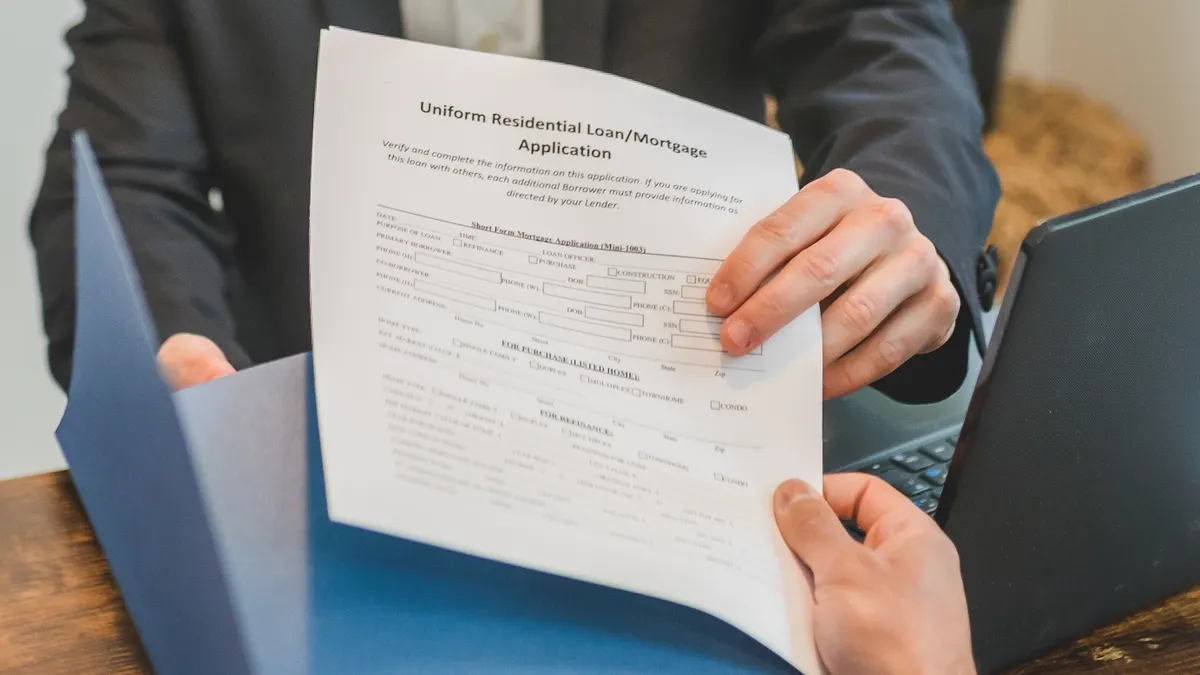
Quick Answer: For most renters, the first move-in bill can easily be two months of rent plus fees if the landlord asks for a security deposit and first month’s rent at signing. If you are trying to rent an apartment or house, the real question in this guide, Rental Application Screening and Move-In Costs, is simple: how do I get approved without getting blindsided by move-in costs? The short answer is that the landlord’s screening is usually looking for income, credit, rental history, and identity; the move-in bill usually includes application fees, a security deposit, first month’s rent, and sometimes extras like pet fees or utility deposits. A clean application saves time. A strong cash plan saves the lease.
I write about housing and tenant-facing paperwork because the expensive mistakes usually happen before anyone signs the lease: missing documents, unpaid screening fees, and underestimating how much money is due before keys are handed over. This topic is most useful when you compare approval requirements with the actual cash due at signing, because the two numbers are not the same.
What rental screening is actually checking
Rental screening is a landlord’s way of deciding whether the applicant is likely to pay on time, follow the lease, and avoid eviction risk. The process is not mysterious, but it is often more detailed than people expect. A landlord may check your identity, your credit report, your criminal history where allowed, your income, your employment, your landlord references, and whether you have prior evictions or collections tied to housing.
The most common mistake is assuming a “good salary” is enough. It often is not. Many landlords use a rent-to-income standard, often around 2.5 to 3 times the monthly rent, but that is only one screen. A high income can still be offset by unstable work history, recent eviction records, or a thin credit file. A low credit score can also matter less if you have strong income, savings, and a co-signer the landlord accepts.
This is where people misread the process. Screening is not a moral judgment; it is a risk filter. The landlord wants evidence, not a story. Pay stubs, an offer letter, bank statements, tax returns, photo ID, and prior landlord contact information usually do more than a vague explanation of why your credit took a hit. If you are unsure how a particular document will be used, consult a housing professional or tenant adviser before submitting it.
The legal side matters too. In the United States, tenant screening and adverse-action rules can be affected by federal fair housing law and the Fair Credit Reporting Act. The Consumer Financial Protection Bureau explains adverse action and credit-report use here: https://www.consumerfinance.gov/consumer-tools/credit-reports-and-scores/answers/what-is-an-adverse-action/ and the HUD Fair Housing page is here: https://www.hud.gov/program_offices/fair_housing_equal_opp/fair_housing_act_overview. Those rules do not guarantee approval, but they do shape what a landlord can ask and how a denial is handled.
How do I pass a rental application screen?

You pass a rental application screen by giving the landlord clean, complete proof that you can pay and will not create avoidable risk. That means submitting the exact documents requested, answering every question honestly, and removing any easy reasons for delay or denial.
The practical checklist is straightforward, but if your situation is unusual, consult a housing professional or tenant advocate before you submit it. Government-issued photo ID, recent pay stubs or proof of income, employment verification or an offer letter, bank statements if income is irregular, prior landlord contact information, Social Security number or other screening identifier where legally required, and a completed application for every adult occupant are the core items. The CFPB and HUD both explain how screening and credit-based decisions can affect renters: https://www.consumerfinance.gov/consumer-tools/credit-reports-and-scores/answers/what-is-an-adverse-action/ and https://www.hud.gov/program_offices/fair_housing_equal_opp/fair_housing_act_overview
Two details matter more than most applicants realize. First, completeness beats elegance. A fully filled-out application with modest income often beats a stronger applicant who leaves blanks. Second, speed matters in competitive markets. If the landlord is screening multiple applicants, an incomplete file can be pushed to the bottom fast.
If your credit is weak, do not pretend it is fine. Instead, reduce the uncertainty. Offer proof of higher cash reserves, provide a co-signer if the landlord allows one, or show a longer job history and prior on-time rent payments. If your rental history is thin because you are a first-time renter, the landlord may weigh employment stability and savings more heavily. In many markets, that means a first-time renter needs more documentation, not more explanation.
There is a downside to overexplaining. A long personal essay rarely helps unless the landlord explicitly asks for a statement. Short, factual answers usually work better. The goal is to make it easy to say yes, not to force the landlord to sort through a backstory.
The move-in costs most renters miss
The move-in costs most renters miss are the ones that sit outside the headline rent number. Rent is only one part of the first bill. Application fees, security deposits, prorated rent, pet charges, and utility setup can turn a “manageable” apartment into a cash squeeze.
The usual cost stack often looks like this, although local law, building policy, and the lease can change the order or the amount:
- Application fee for screening
- Holding fee or administrative fee in some markets
- Security deposit
- First month’s rent
- Prorated rent if you move in mid-month
- Pet deposit or pet rent, if applicable
- Renter’s insurance, if required
- Utility deposits or connection fees
- Key, access card, or lock-change fees in some buildings
The most dangerous assumption is that the security deposit is the only large upfront cost. It is often not. If the lease starts on the 20th, you may owe prorated rent plus the next month’s rent almost immediately. If pets are involved, the monthly total can rise before the lease even begins. In practical terms, that means a unit advertised at one rent number may require a much larger amount on move-in day.
State law can cap or shape some fees and deposits, but those rules vary a lot. That is why the lease packet matters. Read the fee schedule line by line. If a fee is labeled nonrefundable, do not assume it comes back at move-out. If the lease says the deposit can be used for unpaid rent and damage, treat that money as tied up until the final inspection, and consult a professional if the language is unclear.
A good rental plan should separate “money due to apply” from “money due to move in.” Mixing those two buckets is how people get caught short after approval.
How much money should I have ready before signing a lease?

You should have enough ready to cover the full first move-in invoice, not just the advertised rent. For many renters, that means preparing for application costs plus a deposit and at least one month of rent, with extra cushion for utilities and moving expenses. A unit with a $1,500 monthly rent can require several thousand dollars before keys are released.
A simple planning formula helps:
Application phase: screening fee(s) + any document or admin fees
Approval phase: security deposit + first month’s rent + prorated rent if needed
Move-in extras: utility deposits, renters insurance, moving truck, supplies, pet charges
The real issue is cash flow timing. A renter can be “qualified” on paper and still fail the move because the money is not liquid when the lease is ready. Landlords usually want certified funds, cashier’s checks, or online payment by a specific deadline, often before keys are released. In a fast market, that deadline can be the deciding factor.
If the landlord requires a deposit equal to one month’s rent and first month’s rent upfront, you already have a two-rent hurdle before fees and utilities. If pets are involved, the bill can rise again. The exact total depends on local law and the lease terms, so a prudent move is to ask for a written fee list before you apply. Ask early, because the answer affects both your budget and your choice of unit.
This is the point where many generic guides are too vague. They say “save extra.” That advice is true but useless unless you know which charges are likely in your market. Ask for the full move-in ledger, not just the advertised rent.
The honest side-by-side
The application stage and the move-in-cost stage solve different problems. Screening decides whether you get approved. Move-in costs decide whether you can actually take the unit. One can succeed while the other fails, and that is why renters need to treat them separately, with professional help if the lease language is unclear.
| Criteria | Strong application screening | Cash-ready move-in budget | Winner for this condition |
|---|---|---|---|
| What it proves | Paying reliability, identity, rental history, and risk level | Ability to fund the lease start without scrambling | Screening for approval; budget for actual move-in |
| Main documents | ID, income proof, employment verification, rental references | Bank funds, cashier’s check readiness, utility setup plan | Screening |
| Typical failure point | Missing paperwork, weak credit, unverifiable income | Underestimated deposit, prorated rent, or utility charges | Screening for approval, budget for take-home key day |
| Speed factor | Can be slowed by background checks and reference calls | Can be slowed by transfers, deposit deadlines, and certified funds | Budget if the deadline is short |
| Risk if ignored | Denied application or lost unit | Approved lease you cannot afford to start | Both are costly; screening usually loses the unit first |
| Best use of effort | Gather documents early and correct errors before submitting | Build a move-in reserve before touring units seriously | Depends on whether approval or cash is weaker |
| Flexibility | Some weaknesses can be offset with co-signers or stronger income | Cash shortages are harder to patch on short notice | Screening |
| What landlords care about most | Can this applicant pay and behave as promised? | Can this applicant pay everything due now? | Screening at the application stage; budget at signing |
| When it matters most | Before approval | After approval and before keys | Both, in sequence |
The takeaway is not that one replaces the other. Screening gets you in the door. Cash gets you the keys. A renter who focuses only on application approval can still miss move-in by several hundred dollars or more in added fees and deposits, depending on the lease and local rules.
The exact move-in costs a landlord can charge, and which ones to question
The exact move-in costs a landlord can charge depend on state law, city rules, and the lease. That means two identical apartments can have very different upfront bills. Still, certain charges are common enough to expect.
Here is how to read them:
- Application fee: usually covers screening costs. Ask whether it is refundable if the unit is already rented.
- Security deposit: often refundable if you leave the unit in good condition and pay all rent.
- Holding deposit: may reserve the unit; ask whether it converts to rent or deposit.
- Administrative fee: sometimes legitimate, sometimes just a processing charge. Ask what it covers.
- Pet fee or pet deposit: check whether it is refundable and whether monthly pet rent also applies.
- Move-in fee: common in some buildings; often nonrefundable.
- Utility setup or transfer costs: often outside the landlord’s bill but still part of move-in math.
Question any fee that is vague, duplicated, or not described in the lease. A nonrefundable “service fee” with no explanation deserves scrutiny. So does a deposit that sounds like a fee but behaves like prepaid rent. The wording matters because the legal treatment can differ, and a tenant adviser or housing attorney can help if the distinction affects your decision.
The smartest question is not “Can you waive this?” It is “What exactly does this fee cover, and is it refundable?” That wording forces clarity. It also reveals whether the landlord has a clean fee structure or a pile of small charges that add up fast.
Some renters focus only on monthly rent and get trapped by the first invoice. Others overfocus on deposit size and forget that utilities, insurance, and pet charges can keep the move expensive for months. The right lens is total entry cost, not just the rent line.
When do screening and move-in costs become a bad deal?
Screening and move-in costs become a bad deal when the upfront money is too high for the unit’s quality, the lease is too restrictive, or the screening standard is so rigid that it shuts out qualified renters for reasons that do not match the property.
That happens in a few common situations:
- The unit is priced above comparable nearby rentals, yet still demands a large deposit.
- The landlord charges multiple nonrefundable fees that do not clearly reduce risk or improve service.
- The screening asks for excessive documentation that is not clearly tied to lawful or standard checks.
- The lease adds monthly charges that were not obvious in the listing.
- The approval standard is applied inconsistently, which can be a fair-housing concern depending on the facts.
This is where discrimination law and tenant rights may matter, and the details are local. Fair housing rules can apply if screening standards are used selectively or in a way that disproportionately excludes protected groups. The National Association of Realtors publishes tenant-landlord and fair housing resources here: https://www.nar.realtor/fair-housing and the U.S. Department of Justice fair housing overview is here: https://www.justice.gov/crt/fair-housing-act-1. If something feels inconsistent or unexplained, document it and consider legal advice.
A bad deal is not always illegal. Some units are simply expensive to enter and mediocre to live in. If the fees are high but the apartment offers a strong location, a strong lease term, and clear maintenance standards, the cost may still make sense. If not, walking away is often the better move.
The rent market punishes impatience. A good-looking listing can hide a bad total price. Read the application terms and the move-in ledger before you fall in love with the unit.
Choose the stronger screen or the stronger budget?
Choose stronger screening if your income is solid, your documents are clean, and your main risk is approval. Choose a stronger move-in budget if you are likely to be approved but cannot absorb deposits, prorated rent, and utility setup at once. Neither if the lease depends on vague fees, unreadable terms, or a budget so thin that one surprise charge would break it.
That is the clean verdict. If the problem is getting approved, focus on screening. If the problem is paying the start-up bill, focus on cash. If both are weak, pause the search and fix both before applying again.
The common mistake is treating approval as victory. Approval only means the landlord is willing to rent to you. The keys still depend on money in the right form on the right date, often with little flexibility.
What to do before you apply
Before you apply, gather the documents, calculate the full first bill, and ask for the lease fee schedule in writing. That three-part step prevents most of the expensive surprises.
A practical pre-application list:
- Collect ID, income proof, and rental references.
- Check your credit report for errors before the landlord does.
- Ask whether the screening fee is refundable.
- Ask for the security deposit amount, pet charges, and admin fees.
- Estimate the total cash due at signing, not just the monthly rent.
- Set aside extra money for utilities, insurance, and moving costs.
If you do this early, you can compare units on total entry cost rather than hope. That is the difference between a rental search that feels controlled and one that turns into a scramble.
The smartest renters do not just ask, “Can I qualify?” They ask, “What will this cost me to get the keys?” That second question catches the hidden bill before it catches you.
Key takeaways
- Screening and move-in costs are separate hurdles: one decides approval, the other decides whether you can actually move.
- A complete application usually wins on speed and trust, while a full cash reserve wins on lease-start readiness.
- The first bill often includes more than rent and deposit; prorated rent, utility setup, pet charges, and fees can change the total fast.
- A vague fee list is a warning sign. Ask what each charge covers and whether it is refundable.
- If approval is the problem, fix documents and credit explanations first. If cash is the problem, build a move-in fund before applying.
- Walk away from units with opaque charges, inconsistent screening, or upfront costs that do not match the apartment’s value.
Drafted with AI; not yet reviewed by a person.