Last updated: November 05, 2026
Signing a lease is the point where a rental deal stops being a conversation and becomes a legal obligation. The clauses that matter most are the ones that decide how much you pay, who fixes what, how long you are stuck, and how hard it will be to leave.
If you are about to sign a residential lease, the real question is not “Is this lease standard?” It is “Which clauses can cost me money, trigger eviction, or trap me in a bad situation if my life changes?” I read and explain lease language for a living, and the clauses that create the most trouble are usually not the dramatic ones. They are the ordinary-looking lines about repairs, renewals, fees, notice, and occupancy. In this guide to Lease Signing and Lease Clauses — The Complete Guide, the focus is on the clauses that most often affect money, repairs, and exit rights.
What a lease actually locks in
A lease locks in four things at once: the unit, the price, the term, and the rules. That sounds obvious, but many renters treat the lease as a formality until a dispute starts, so it is wise to review it carefully and, if needed, consult a lawyer or local tenant advocate. It is a contract, and the signed version usually controls even if the property manager said something different earlier.
The most important detail is that the lease can change the practical cost of renting far beyond base rent. A $1,850 monthly rent can become much more expensive once the lease adds late fees, utility allocations, pest-control charges, parking fees, pet rent, required insurance, or a nonrefundable move-in charge. Those items may be lawful or ordinary in some markets, but they belong in the same mental bucket as rent because they affect the real monthly burden.
A good lease is specific. It names the parties, the exact address, the term dates, the rent due date, the accepted payment method, and what happens if payment is late. Vague language helps the side with more leverage, usually the landlord. If a clause says something like “tenant is responsible for all repairs,” that deserves scrutiny because it may try to shift duties that local landlord-tenant law does not allow a landlord to waive. In many places, habitability rules limit how far those clauses can go; a local tenant attorney or housing authority can tell you what applies where you live.
Before signing, check the clauses that affect daily life, and consult a professional if anything is unclear:
- who may live there and how many people may stay
- what counts as normal wear and tear
- when rent increases can happen
- whether subletting is allowed
- who handles maintenance and when
- what fees can be charged and under what conditions
This is the part most generic advice gets wrong: it treats every clause as equally important. They are not. A line about paint color matters less than the clause that lets the landlord charge a flat “administrative fee” for almost any violation. The first is cosmetic. The second can become a recurring bill.
Which lease clauses should you read first?
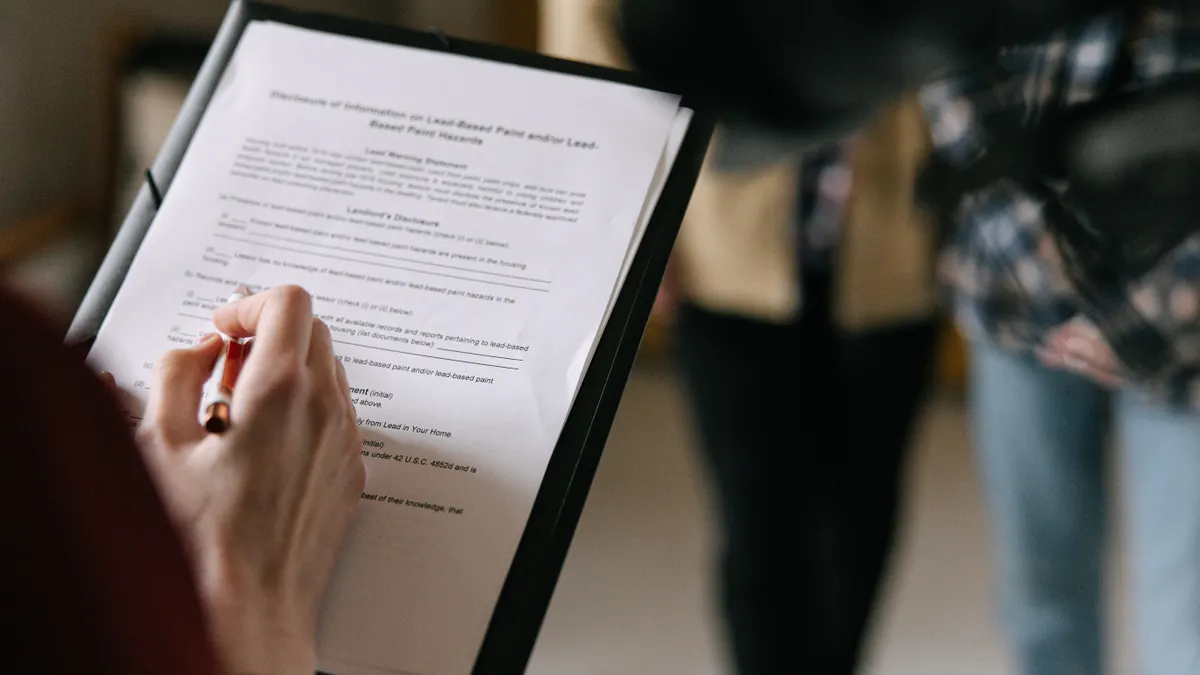
The first clauses to read are rent, term, renewal, termination, maintenance, fees, and occupancy, because those are the ones that usually create the biggest financial or legal consequences.
Start with rent and payment terms. Look for the due date, grace period, acceptable payment methods, returned-payment fees, and late-fee language. If the lease says rent is due on the first but the landlord accepts only a payment portal that sometimes takes days to process, ask how they treat processing delays and, if needed, consult a professional before you sign. The detail matters because “late” can mean a fee, a notice, or both.
Then read the term clause. A one-year lease is not just 12 months of rent. It is a commitment to occupy for a fixed period unless the lease allows early termination, assignment, or a break clause. If the lease auto-renews, find the notice window. Many renewal disputes happen because the tenant misses a 30- or 60-day deadline buried in the text.
The maintenance clause is next. This is where leases often blur the line between reasonable tenant duties and unlawful overreach. A tenant can usually be asked to keep the unit clean, replace lightbulbs, report damage promptly, and avoid deliberate harm. A lease may also assign filter changes or minor yard upkeep. But if the clause tries to make the tenant responsible for major systems, structural repairs, or anything connected to code compliance, that is a warning sign.
Fees deserve their own close read because they are often written in dense language. Check for:
- late fees
- NSF or returned-check fees
- key or lock replacement fees
- amenity fees
- pet fees and pet deposits
- cleaning fees
- move-out charges
- legal or notice fees
The issue is not only the amount. It is whether the lease describes when the fee is allowed. A fee with no trigger is a blank check.
Occupancy and guest clauses are easy to ignore until they become a problem. Some leases limit overnight guests, long-term visitors, or the number of adults in the unit. A clause that bans guests after a short period can be a real hardship if you travel, host family, or have a partner staying temporarily. If the rule is vague, ask for a written interpretation before signing.
What the lease says about repairs and habitability
What the lease says about repairs and habitability matters because the repair clause is one of the easiest places for risk to shift. The strongest versions make the landlord responsible for structural, plumbing, electrical, heating, and code-related issues, because those are not casual maintenance items. A weak repair clause shifts too much risk to the tenant and can turn ordinary living problems into disputes.
This is where many renters make a bad assumption: they believe that “as-is” means they must accept broken or unsafe conditions. In most residential settings, that is not how the law works. Local habitability rules usually require a dwelling to meet basic safety and livability standards. A lease that says the tenant accepted the unit “as-is” should be read in light of those rules, not as a substitute for them. That does not mean you should ignore the wording. It means you should not assume the clause is stronger than the law.
Read the repair section for three things:
- How fast the landlord must respond.
- What the tenant must do to report a problem.
- Whether the lease tries to shift costly repairs onto the tenant.
If the lease says all repair requests must be submitted through a portal within 24 hours, comply with that process once you sign. Many landlords defend themselves by saying they never got proper notice. Keep screenshots, email copies, and dated photos when something breaks.
Watch for clauses that require the tenant to:
- pay for repairs caused by “normal use”
- reimburse the landlord before liability is decided
- use only approved vendors
- waive claims for water damage unless reported within a very short period
Those clauses can matter a lot after a leak, mold complaint, or appliance failure. A tenant may have a duty to report damage promptly, but a lease should not pretend that every water issue is automatically the tenant’s fault. If a clause makes you responsible for damage that comes from the building itself, ask for clarification or redlines before signing.
One more point: get the repair rules in writing before move-in photos are taken. If the apartment already has a cracked tile, stained carpet, broken blind, or damaged appliance, the lease or a move-in checklist should reflect that. Without documentation, a landlord can later argue the damage was yours.
For a serious repair or safety dispute, check local landlord-tenant guidance from a state housing agency or a city tenant-rights office, and consider speaking with a lawyer licensed in your state. Residential lease law is heavily local. The U.S. Department of Housing and Urban Development also offers housing resources, and many state attorney general offices publish tenant guidance.
Fees, deposits, and the hidden cost of “cheap” rent

The hidden cost of a lease is usually the list of charges attached to it, and those charges matter more than the headline rent when you are trying to budget.
Security deposit language should tell you how much is collected, where it is held if the law requires that, what deductions are allowed, and how long the landlord has to return it after move-out. If the lease is silent on return timing, the local law may still control. The same is true for deposit limits and interest rules in some states. Do not assume the lease is the full rulebook.
Then look at nonrefundable charges. A move-in fee labeled “administrative,” “processing,” or “amenity” may never come back, even if you leave the apartment spotless. A pet fee may be nonrefundable while a pet deposit may be refundable. Those words are not interchangeable. If the lease uses both terms, ask which amount is which and whether anything is capped by local law.
Late fees need special attention. The lease should say when they start, how they are calculated, and whether a grace period applies. A flat late fee of $75 sounds simple, but a lease that adds a daily charge after that can become expensive quickly. The problem is not only the amount. It is the stacking.
Also look for charges that appear only at move-out:
- carpet cleaning
- repainting
- lock changes
- trash removal
- “excessive wear”
- professional cleaning regardless of condition
Some of those are legitimate only if the unit is actually dirty or damaged. A lease that says every tenant must pay for professional cleaning no matter what is more suspect, because it can function like a disguised extra deposit.
Here is the practical test: if a charge is likely, ask whether it is refundable, when it is triggered, and whether the amount is fixed or discretionary. A lease that leaves those answers vague is a lease that favors the landlord. For background on deposits and fees, the Federal Trade Commission and state consumer agencies are useful starting points.
Can you change lease clauses before you sign?
Yes, you can ask to change lease clauses before you sign, and the best time to do it is before the paperwork is executed, not after.
A generic article often says leases are “nonnegotiable.” That is too simplistic. Large property managers may resist changes, but many will accept small edits if the request is clean and limited. What usually works is asking for one specific change, in writing, tied to a concrete issue. For example:
- remove a blanket “all repairs at tenant expense” clause
- extend the guest period from 3 nights to 7 nights
- add a 14-day repair response target for nonemergency issues
- clarify that carpet replacement will not be charged for ordinary wear
The more targeted the request, the better. A landlord is more likely to accept a narrow edit than a full rewrite.
Put every agreed change into the lease itself or into a signed addendum. An email thread helps, but the signed contract controls. If the manager says, “Don’t worry, we never enforce that clause,” do not rely on the reassurance alone. Staff change, ownership changes, and memories fade. Written terms survive.
This section is where the reader should become mildly skeptical of verbal promises. “We’ll handle that later” is not protection. “We’ve never had a problem with that” is not a waiver. If a clause matters enough to mention, it matters enough to write down.
There is a downside to pushing edits: some landlords will take the unit off the table. That is not always a bad outcome. If a lease only works when you ignore half of it, the apartment may already be too risky for your situation. The right move depends on how competitive the market is, how urgently you need housing, and whether the clause creates a problem you cannot live with, such as automatic renewal, broad entry rights, or high fees.
For high-stakes decisions, a local attorney or tenant advocate can review the lease language, especially if the lease includes unusual waivers, arbitration language, or a move-out penalty. I cannot tell you what is enforceable in your jurisdiction without knowing the state and city, and that is not something to guess at. The Consumer Financial Protection Bureau and HUD both publish plain-language housing resources that can help you prepare questions before you sign.
The honest side-by-side: standard clauses versus risky clauses
Standard clauses are usually fine when they are specific, balanced, and tied to ordinary rental administration. Risky clauses are the ones that are vague, one-sided, or broad enough to shift major cost or liability to the tenant.
| Criteria | Standard clause | Risky clause | Winner for this condition |
|---|---|---|---|
| Rent timing | Due date, grace period, and payment method are spelled out. | Rent is “due when billed” or late after a vague internal process. | Standard clause for predictable budgeting |
| Late fees | Fixed fee or clearly defined formula with trigger date. | Daily fees, stacking penalties, or “additional charges” with no cap. | Standard clause for cost control |
| Repairs | Landlord keeps structural and systems responsibility. | Tenant takes responsibility for broad or undefined repairs. | Standard clause for habitability protection |
| Deposits | Refund terms and deduction rules are specific. | Multiple nonrefundable charges are bundled with “deposit-like” wording. | Standard clause for getting money back |
| Entry | Landlord gives notice except for emergencies, subject to local law. | Landlord may enter “at any time” for inspection or showings. | Standard clause for privacy |
| Guests and occupancy | Reasonable limits with a clear guest policy. | Very short guest windows or unclear approval requirements. | Standard clause for normal living |
| Renewal | Notice window is clear, usually 30 or 60 days. | Auto-renewal with a tight deadline or silence on notice. | Standard clause for exit planning |
| Subletting | Consent is required, but the process is described. | Subletting is flatly banned or left entirely to landlord discretion. | Standard clause for flexibility |
| Move-out charges | Charges depend on actual damage or extra cleaning beyond normal wear. | Automatic cleaning, repainting, or carpet fees no matter the condition. | Standard clause for fairness |
The table is simple on purpose: the most dangerous clause is not always the one that sounds harsh. Sometimes it is the one that sounds routine but hides a broad permission, a fee trigger, or a deadline that is easy to miss.
What lease clauses mean if you plan to move, sublet, or break early
A lease is most restrictive when your life is least predictable, so the early-exit clauses matter more than many people expect.
If you might move for work, family, school, military service, or a relationship change, read the termination, assignment, and subletting clauses before anything else after rent and repairs. Many tenants assume they can “find someone to take over,” but that only works if the lease allows it or the landlord agrees in writing. Without that permission, you may still owe rent until the lease ends or until the unit is re-rented, depending on local law and the contract terms.
Early termination clauses vary widely. Some require a fixed penalty, such as two months’ rent. Others require you to keep paying until the landlord finds a replacement tenant. Some do both. The cost can be substantial, which is why the presence or absence of a break clause changes the value of the lease.
Subletting deserves separate attention because it is not the same as assigning the lease. Assignment usually replaces you with another tenant; subletting often means you stay responsible while someone else occupies the unit. A lease that bans both removes your escape routes. That may be acceptable if you have stable plans and no reason to move. It is a bad fit if your job, school, or family situation could change on short notice.
If the lease has a renewal clause, note the exact date by which notice must be given. A 60-day notice requirement can be easy to miss when you are busy. Miss it once, and you may get locked into another term or converted to month-to-month at a higher rate if the lease says so.
The right attitude here is not paranoia. It is realism. If there is even a moderate chance that you will move before the term ends, a rigid lease with no sublet path is the wrong tool. The lease should match your expected timeline, not just your current budget.
The verdict: which clauses matter most and when to walk away
Choose the tenant-favoring version of a clause if the lease is long, the market is tight, and the clause affects money, repairs, notice, or exit. Choose the landlord-favoring version only when the trade-off is narrow, clearly defined, and matched by a lower risk to you. Neither if the lease tries to waive basic habitability, stacks vague fees, or hides renewal and termination rules in a way you cannot cleanly follow.
That is the hard line. A lease is worth signing when the obligations are clear and the big risks are visible. It is not worth signing when the contract depends on trust, verbal promises, or your ability to ignore the fine print.
The clauses that usually deserve your first and second pass are:
- rent and late fees
- repairs and maintenance
- deposits and move-out charges
- renewal and notice
- subletting and early termination
- occupancy and guest limits
- landlord entry rules
If those are fair and understandable, the rest is usually manageable. If those are not fair and understandable, the lease is telling you something before you ever move in.
What should I ask before I sign a lease?
Ask what the lease does not say plainly: who pays for what, when fees start, how notice must be given, and what happens if you need to leave early.
Keep the questions short and specific. “Are there any nonrefundable fees besides rent?” is better than “Can you explain the charges?” “How much notice do I need to give to avoid auto-renewal?” is better than “What’s the renewal process?” If you get an oral answer, ask for it by email.
Bring up these points before signing:
- exact deposit amount and return timing
- late-fee trigger and grace period
- repair reporting method
- guest and occupancy limits
- subletting or assignment permission
- renewal deadline
- any automatic cleaning or move-out fees
If the answer is vague, treat that as a warning. A lease that cannot be explained in plain language is a lease that may be expensive to live with later. For legal or jurisdiction-specific questions, a local housing agency or attorney should review the clause.
What should make me refuse the lease?
Refuse the lease if it requires you to waive core rights, hides major fees, or makes everyday living depend on unenforceable promises.
A hard no is appropriate when you see clauses like these:
- unlimited landlord entry without notice, except where local law clearly allows it
- tenant responsibility for major structural or code-related repairs
- automatic fees that are not tied to actual damage or overdue payment
- a renewal trap with no clear notice window
- a clause that conflicts with what the landlord said but refuses to correct in writing
- broad waiver language for habitability, security, or repair claims
A lease can still be bad even if every line is technically legal. The question is whether the risk is acceptable for your situation. If the answer depends on “probably nothing will go wrong,” the lease is too thin on protection.
The safer move is to walk away than to sign a contract you already suspect will be a problem. That is especially true if you have other options within a similar budget. The cost of signing the wrong lease is often much higher than the inconvenience of finding a different apartment.
Key takeaways
- The clauses that matter most are the ones that control rent, repairs, fees, renewal, and exit.
- “Standard” language is only useful when it is specific enough to enforce.
- Vague fee clauses and broad repair-shifting clauses are the biggest red flags.
- Auto-renewal and short notice windows create avoidable traps.
- You can ask for edits before signing, and the best changes are narrow, written, and attached to the lease.
- If the lease depends on verbal reassurance, it is not ready to sign.
Drafted with AI; not yet reviewed by a person.