
Last updated: November 05, 2026
A lease agreement is the contract that decides what a tenant must pay, what a landlord must provide, and what happens if either side breaks the deal. If you are about to sign one, the clauses that matter most are the ones about rent, length of stay, deposits, repairs, guests, and subletting. Quick answer: the 5 clauses most renters should check first are rent, term, repairs, occupancy, and sublease.
Key takeaways
- A lease is not just a rent amount and a move-in date; it is a rulebook with deadlines, fees, and limits.
- The rent clause should spell out the exact amount, due date, grace period, and late fee formula, not vague promises.
- Term length and renewal language can lock you in for 12 months or roll you into a month-to-month holdover.
- Maintenance clauses matter because they decide who handles filters, light bulbs, leaks, pests, and emergency repairs.
- Occupancy and sublease clauses can restrict roommates, guests, and transfers even when the rent is paid on time.
- If any clause is unclear, changing it before signing is easier than arguing about it after you have already moved in.
What the lease agreement is really doing
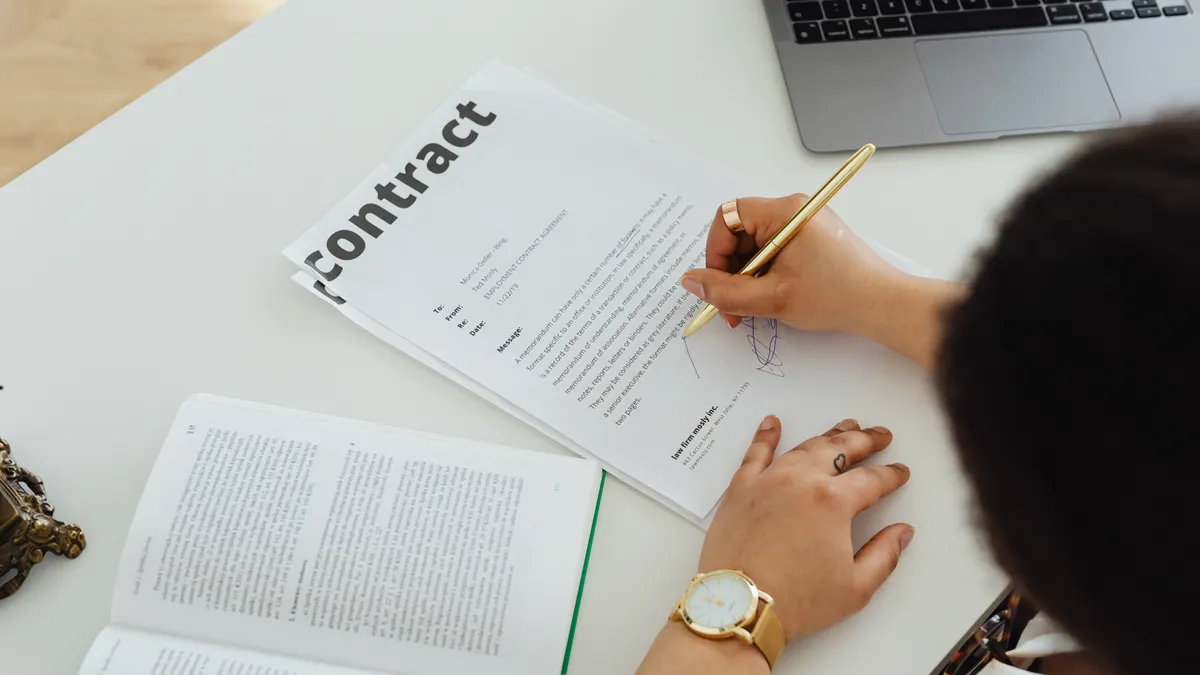
A lease agreement is setting the price, the timeline, and the rulebook for the tenancy. It is not just paperwork. It is the document a landlord will point to when rent is late, a pet shows up, a roommate moves in, or a security deposit is withheld for alleged damage.
The clauses that deserve the closest reading are the ones that control money and control of the unit. Look for the exact rent amount, the due date, the length of the term, renewal language, maintenance duties, and any sublease clause. Those sections usually decide the biggest disputes.
A generic lease often looks harmless because the sentences are short and the font is small. The risk is usually buried in one of three places: the definition section, the fee section, or the “rules and regulations” page at the end. A clause that says “landlord may charge reasonable fees” sounds mild until you discover there is no cap, no schedule, and no explanation of what counts as reasonable.
This is the part many renters miss: a lease can be legally binding even when it feels one-sided. If a clause assigns the tenant a duty, it can still be enforceable unless it conflicts with a stronger rule elsewhere in the document or in local law. For that reason, the right move is to read for practical consequences, not just for bad wording. See the lease, security deposit, and move-in checklist pages for related issues.
How do I read a lease agreement without missing the risky parts?
Read a lease agreement in the same order you would troubleshoot a car: start with the parts that make it run, then check the rules that can strand you later. The most useful method is to scan for dates, dollar amounts, and action words like “shall,” “must,” “may,” and “terminate.” For a plain-English overview, the Consumer Financial Protection Bureau and USA.gov both explain why rental terms and fees should be checked before you sign.
- Check the lease term first. Find the start date, end date, and whether the lease is fixed-term or month-to-month. A 12-month lease and a month-to-month tenancy carry very different exit rules.
- Mark every payment clause. Circle the monthly rent, the due date, the payment method, grace period, late fee, returned-payment fee, and any charge for paying by card. The result should be a complete cost picture for one month.
- Read the maintenance section line by line. Note who handles routine tasks, who handles major repairs, and what notice the tenant must give for entry. A clause that says “tenant is responsible for all maintenance” can be much broader than it sounds.
- Find the occupancy and guest rules. Count how many people may live there and how long guests may stay. A 2-person occupancy cap can block a roommate later.
- Locate the sublease language. Look for whether subletting is banned, allowed only with written consent, or allowed with conditions. This section matters if plans change mid-lease.
- Review move-out and deposit language. Find the cleaning standard, forwarding-address requirement, and any fees tied to key return, carpet cleaning, or professional cleaning. That tells you what the landlord expects at the end.
- Check renewal and holdover terms. See whether the lease renews automatically, converts to month-to-month, or requires notice 30 or 60 days before the end date. This is often where surprise rent increases appear.
The cost of skipping this process is usually not dramatic at first. It becomes expensive later, when a tenant pays a late fee on day 4, discovers a roommate is not allowed, or learns that “repair” was defined to include replacement costs. A slow read now saves a fast argument later.
Which rent clauses matter most before signing?

The rent clause matters most when it tells you not just what you owe, but when and how the landlord can charge more. A good rent section should answer five questions: how much, when due, what counts as late, how payment is made, and whether the amount can change during the term.
Start with the exact monthly rent. Then look for language about partial payments. Some leases say the landlord may refuse partial rent and still treat the account as unpaid, so it is wise to confirm that wording with a housing attorney or local tenant group if you think you may ever need to pay in parts. That can matter if you ever pay in two parts.
Next, check the due date and grace period. If rent is due on the 1st, the lease should say whether a payment made on the 3rd or 5th is late. If there is a late fee, the clause should explain whether it is a flat fee or a percentage, and whether it is charged once or repeatedly. A clause that stacks a daily fee on top of a flat fee is more expensive than it looks.
Look for extra charges tied to the payment method. Some landlords add processing fees for credit cards, money orders, or online portals. Others allow only one method, such as ACH transfer or check. A tenant who assumes every payment method is accepted may end up paying a fee just to avoid being marked late.
Also check whether the landlord can raise rent during the lease term. In a fixed-term lease, the rent is usually fixed for that term unless the document specifically allows changes. If the lease says the landlord may revise rent with notice, that is not the same as a locked price.
The warning sign here is vague phrasing like “customary charges” or “standard late fees.” Those words often hide the real number. A better clause names the charge directly or points to a schedule attached to the lease. Related reading: how rent increases work and late fees explained.
What term length and renewal language should I watch for?
Term length and renewal language decide how long you are committed and how hard it is to leave at the end. A 6-month lease, a 12-month lease, and a month-to-month arrangement all create different obligations, even when the rent is the same.
The term section should clearly state the move-in date and the move-out date. If the dates are missing or inconsistent across pages, stop and ask for a corrected copy. That sounds basic, but date errors can create real trouble when the landlord later claims the lease ended on a different day.
Renewal language is where many renters get trapped. Some leases renew automatically unless notice is given 30, 45, or 60 days before the end date. Others convert to month-to-month after the fixed term ends. Those are not the same outcome. Automatic renewal can keep you committed for another full term. Month-to-month usually gives more flexibility, but it can also mean a shorter notice period for rent changes or termination.
Watch for “holdover” clauses too. These often say that if you stay after the lease ends without a new agreement, you owe a higher rent or a daily charge. A holdover rate can be much more than the normal monthly rent divided by 30, so it is worth reading closely.
The trade-off here is simple: longer terms often offer more stability, while shorter or rolling terms offer more flexibility. If your job, school schedule, or household plans may change within a year, a strict 12-month renewal setup may be wrong for you unless the exit language is very clear. See also breaking a lease and month-to-month leases.
Who is responsible for maintenance, repairs, and entry?
The maintenance clause decides who fixes what, who pays for what, and how much access the landlord gets. A vague clause can turn a small problem into a bill, especially when it combines repair duties with broad entry rights.
Read for three things: routine upkeep, damage responsibility, and entry notice. Routine upkeep usually covers simple tasks such as changing batteries, replacing light bulbs, and keeping the unit sanitary. Repair responsibility should say whether the landlord handles plumbing, electrical systems, heating, cooling, and structural issues. If the lease says the tenant is responsible for “all repairs caused by negligence,” that may be fair. If it says the tenant is responsible for “all repairs,” that is far broader.
Then check what counts as emergency access and ordinary access. A lease often allows the landlord to enter for repairs, inspections, or showing the unit to future renters, but the notice requirement should still be stated. If the lease says the landlord may enter “at any time,” that is a red flag unless the clause is narrowed by notice and emergency exceptions.
The main mistake renters make is assuming maintenance language only matters when something breaks. It matters on day one, because it can also determine cleaning standards, pest control responsibility, and who must clear a clogged drain. A clause that assigns all of that to the tenant can cost time and money quickly.
A fair lease usually separates tenant-caused damage from ordinary wear and tear. If the document blurs that line, it is worth asking for clearer wording before signing. That distinction matters at move-out as much as it does during the lease. For more on this, see tenant repair responsibilities and security deposit deductions.
What lease clauses are red flags?
The biggest red flags are clauses that are vague, one-sided, or broad enough to let the landlord change the deal without a clear limit. If a sentence gives one side power without a matching standard, it deserves attention.
Common examples include:
- Unlimited fee clauses. If the lease allows “any fees deemed appropriate,” the cost is unpredictable.
- Automatic renewal without clear notice. A tenant can miss a 30- or 60-day deadline and get locked into another term.
- Overbroad repair responsibility. If the tenant pays for all repairs, even major systems may become the tenant’s problem.
- Broad guest restrictions. A clause that bans guests after 2 nights, for example, can make ordinary visitors a violation.
- Hard bans on subletting without any consent process. That can trap a tenant if work, school, or family changes force a move.
- Unclear occupancy limits. If the lease caps occupancy without defining who counts as a resident, a roommate or partner may become a breach issue.
- Late fee stacking. A flat late fee plus daily charges plus collection costs can add up fast.
A red flag is not always a dealbreaker, but it is a sign to slow down and ask for clarification. Sometimes the fix is simply to ask for a sentence to be rewritten. But a lease with several broad clauses in the same direction is a sign that the document favors the landlord heavily. That may be acceptable in a tight rental market, but it is not something to sign blindly.
Take special care with clauses that say the landlord can change rules by posting a notice in the building or sending an email. If the lease lets one side revise rules unilaterally, the actual deal can shift after signing unless the document limits those changes. Guidance on notice and lease changes is also discussed by the FTC and local tenant agencies.
What should I know about occupancy rules and a sublease clause?
Occupancy rules and the sublease clause decide who can live there, who can visit, and whether you can transfer the lease if life changes. These clauses are easy to skim past and expensive to violate.
Occupancy rules usually name the maximum number of residents and may limit long-term guests. A lease might allow only the named tenant and one approved occupant, or it may require written notice before anyone stays more than a certain number of days. Some leases also restrict roommates, children, or additional adults even when the space physically fits them. The number in the clause matters more than the square footage.
The sublease clause is just as important. Subletting means another person takes over part or all of the lease from the tenant, usually with the landlord’s approval. A strong sublease clause says whether subletting is forbidden, allowed with written consent, or allowed only if the incoming person passes screening. If the lease is silent, that is not permission. Silence usually means you need to ask before assuming anything.
This section is where many renters make a costly mistake: they rely on informal approval from a manager or assume a text message is enough. If the lease requires written consent, get written consent. A verbal yes can disappear fast when there is a dispute.
If your plans may change, match these clauses to real life rather than a best-case scenario. If you plan to live alone, a strict occupancy clause may be fine. If a roommate may move in later, or if you may need to leave before the term ends, a rigid ban on guests and subletting may make the lease wrong for you. See subletting rules and roommate agreements.
If the language is dense, ask the landlord to point to the exact sentence covering each issue: residents, guests, and subleasing. That forces the document to speak plainly.
What should I ask for before I sign the lease?
You should ask for any unclear clause to be written in plain terms before your signature goes on the page. A lease is much easier to fix before signing than after a dispute starts.
Focus on four requests. First, ask for the rent clause to show the full monthly cost, the late fee, and any payment-method fee in one place. Second, ask for the maintenance clause to state who handles routine tasks and who handles major repairs. Third, ask for the occupancy rule to name the maximum number of residents and the guest limit. Fourth, ask for the sublease clause to say exactly whether subletting is allowed and on what terms.
If the landlord resists clarifying a clause, that is useful information. It may mean the language is meant to stay broad. A renter who is comfortable with that risk can sign anyway, but it should be a deliberate choice, not an accident.
One practical test helps: read the clause aloud and ask whether a stranger could use it to charge you money, deny a roommate, or claim a breach. If the answer is yes and the clause is vague, it needs revision or explanation. The right lease does not need to be perfect, but it should be understandable in the same room where it is signed. For more help, review how to negotiate a lease and renter rights basics.
Drafted with AI; not yet reviewed by a person.